
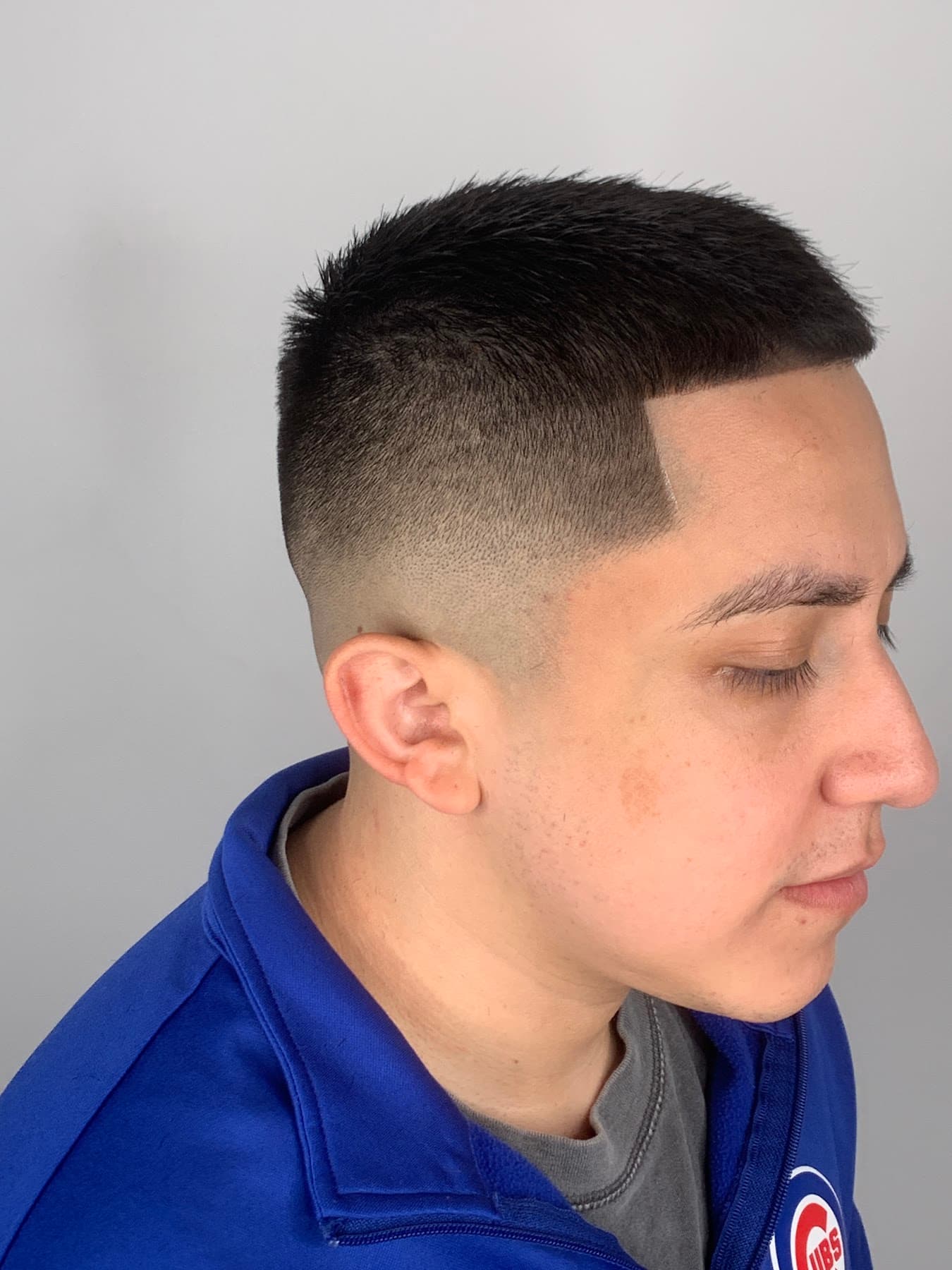
Clipper guard numbers
- #0: about 1/16 inch. Nearly skin.
- #1: 1/8 inch. Very short, scalp visible.
- #2: 1/4 inch. Short but solid coverage.
- #3: 3/8 inch. The most common "short back and sides".
- #4: 1/2 inch. Noticeably fuller.
- #6 to #8: 3/4 to 1 inch. Long enough that scissor work usually takes over.
A script that works
Sides and back: "I want a [low / mid / high] fade, shortest point a [number], blended up into the length on top."
Top: "Leave enough that I can [push it back / wear it forward / part it]. Take off about [a third / half] of what is there now."
Neckline: "Square it off" or "round it" or "leave it natural." If you do not have a preference, say so and let the barber choose for your hairline.
Finish: "I usually wear it [with product / air dried]." This changes how the cut is balanced.
Things worth saying that people skip
- Any cowlick, scar, or spot you always struggle with. Barbers work around these but need to know first.
- How much time you spend styling in the morning. If the answer is none, say it and the cut will be built accordingly.
- When your next event is. It changes how short is sensible today.
- What went wrong last time. It is not rude and it is the fastest way to avoid a repeat.
The one rule for photos
Bring a photo of someone with hair like yours, not just a haircut you like. A style on straight fine hair will not behave the same on thick coarse hair, and a good barber will tell you that up front.
Two photos are even better: the result you want, and something you specifically want to avoid. The second one often communicates more than the first.